
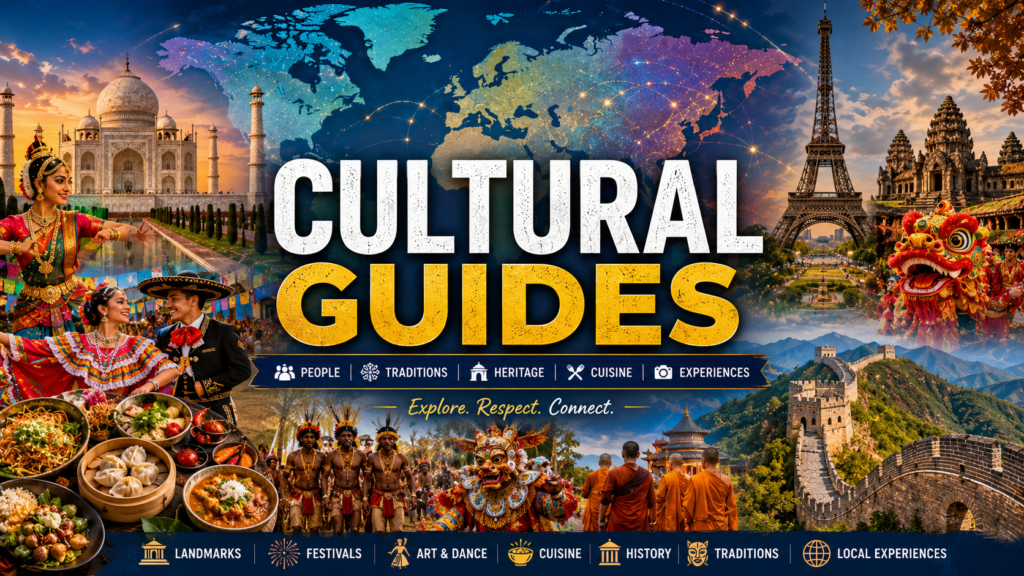
Cultural Guides
Every country has unique traditions, customs, values, and ways of life that make it special. Understanding different cultures helps people connect with communities, appreciate diversity, and travel with greater confidence and respect. Cultural guides provide valuable insights into local traditions, social etiquette, celebrations, food, clothing, and historical heritage.
EventoriaHub helps visitors explore cultures from around the world through informative guides designed to introduce customs, traditions, and important cultural practices. Whether you are planning international travel, studying global societies, or simply interested in learning about different communities, cultural knowledge can enrich your understanding of the world.
Why Cultural Understanding Matters
Learning about different societies promotes respect, awareness, and meaningful connections. Understanding local customs can help travelers avoid misunderstandings while creating more authentic experiences.
Cultural awareness also supports international communication, education, tourism, and business relationships. By understanding traditions and social expectations, individuals can engage more confidently with people from different backgrounds.
Key Elements of Culture
| Cultural Element | Description |
|---|---|
| Traditions | Practices passed down through generations |
| Customs | Accepted social behaviors and etiquette |
| Language | Communication methods and expressions |
| Cuisine | Traditional foods and cooking styles |
| Festivals | Community celebrations and special occasions |
| Clothing | Traditional and regional attire |
| Heritage | Historical and cultural legacy |
| Arts | Music, dance, literature, and crafts |
Traditions Around the World
Asia
Asian cultures are known for strong family values, respect for elders, traditional ceremonies, and rich cultural heritage. Many countries maintain customs that have existed for centuries.
Europe
European nations offer diverse traditions influenced by history, art, architecture, and regional customs. Visitors can experience unique celebrations, food traditions, and cultural landmarks.
Africa
African cultures are characterized by community connections, storytelling traditions, music, dance, and vibrant cultural expressions that vary across regions.
North America
North America combines indigenous traditions with influences from diverse immigrant communities, creating a rich cultural landscape.
South America
South American countries are known for colorful celebrations, music, dance, and strong cultural identities rooted in history and community life.
Oceania
Australia, New Zealand, and Pacific Island nations preserve indigenous traditions while embracing multicultural influences and modern cultural practices.
Cultural Etiquette Tips
When visiting a new destination, understanding local etiquette can improve interactions and show respect for community values.
Common recommendations include:
- Respect local customs and traditions.
- Learn basic greetings when possible.
- Dress appropriately for cultural settings.
- Follow local dining etiquette.
- Be mindful of religious practices.
- Ask permission before photographing people or sacred sites.
Benefits of Exploring Different Cultures
Learning about cultural traditions helps people broaden their perspectives and appreciate global diversity. Exposure to different customs encourages understanding, empathy, and respect for communities around the world.
Cultural experiences often provide memorable opportunities to learn about history, food, language, art, and everyday life in different regions.
Explore Cultural Guides with EventoriaHub
EventoriaHub provides resources about traditions, customs, etiquette, heritage, celebrations, and cultural experiences from countries around the world. Our goal is to help visitors gain a deeper understanding of diverse communities while promoting cultural appreciation and responsible travel.
Whether you are researching traditions, planning international travel, or exploring world cultures, our guides provide valuable insights into the customs and heritage that shape societies worldwide.
Frequently Asked Questions
What are cultural guides?
Cultural guides are resources that explain traditions, customs, etiquette, heritage, and social practices in different countries and communities.
Why are cultural guides useful?
They help travelers, students, researchers, and professionals understand local customs and interact respectfully with different cultures.
Do cultural guides include festivals and traditions?
Yes. Many guides cover celebrations, traditions, historical heritage, and community customs.
Can cultural knowledge improve travel experiences?
Absolutely. Understanding local customs often leads to more meaningful and enjoyable travel experiences.
To learn more about world cultures, traditions, and heritage sites, visit the UNESCO World Heritage Centre, which provides valuable information about cultural landmarks and historical sites from around the world.